Skip to Content

AI Governance

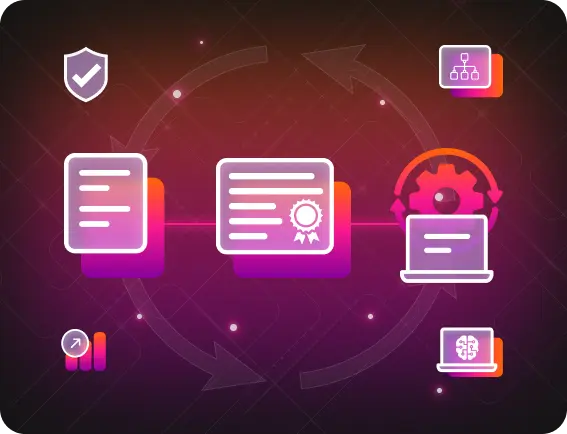
At CIVIE, responsible AI is not an afterthought — it is embedded into every stage of how we design, develop, deploy, and monitor our AI systems. Our AI Governance program ensures that AI is used in a way that is compliant, secure, transparent, and accountable — especially given the sensitive nature of the healthcare data we handle.

ai-governance-hero

Our Commitment to Responsible AI

CIVIE has established a formal AI Governance Framework aligned to the leading regulatory and standards bodies in healthcare AI. We govern all AI and machine learning systems that process Protected Health Information (PHI), support clinical decision-making, or are used in administrative and operational functions.

Guiding Principles

Our AI Governance is anchored by six core principles:

icon-privacy-by-design

Privacy by Design

PHI protection is embedded into AI systems from inception. We make sure PHI is only used where required for business needs and apply the necessary security standards to all data accessed by AI.

icon-fairness-equity

Fairness & Equity

AI systems are regularly audited for bias across race, ethnicity, gender, age, disability, and socioeconomic status. Identified bias is remediated within 90 days.

icon-transparency

Transparency

AI decision logic is explainable to clinicians, patients, and regulators. We maintain model documentation covering intended use, performance metrics, and known limitations.

icon-accountability

Accountability

Clear ownership and responsibility is documented for every AI system. Humans remain accountable for AI outputs, with defined oversight mechanisms.

icon-reliability-safety

Reliability & Safety

AI systems are tested for accuracy and safety before deployment and continuously monitored in production. Performance drift and anomalies are detected in real time.

icon-human-oversight

Human Oversight

Clinically significant AI decisions require human review before action is taken.

Regulatory & Standards Alignment

Our framework is built around the following regulatory and standards layers:

HIPAA

HIPAA

All AI systems handling PHI comply with the HIPAA Privacy and Security Rules.

NIST AI RMF 1.0

NIST AI RMF 1.0

We apply the NIST AI Risk Management Framework (Govern, Map, Measure, Manage) to systematically identify, assess, and manage AI risk.

ISO/IEC 42001:2023

ISO/IEC 42001:2023

We are implementing a formal AI Management System (AIMS) conforming to the world’s first international standard for AI governance.

HITRUST CSF

HITRUST CSF

Healthcare-specific security controls are applied to all AI systems touching PHI, with HITRUST certification as a key compliance target.

AI Risk Controls & Safeguards

From PHI protection to vendor risk and security controls — the operational standards behind every AI system at CIVIE.

ai-governance-hipaa

Data Governance & PHI Protection

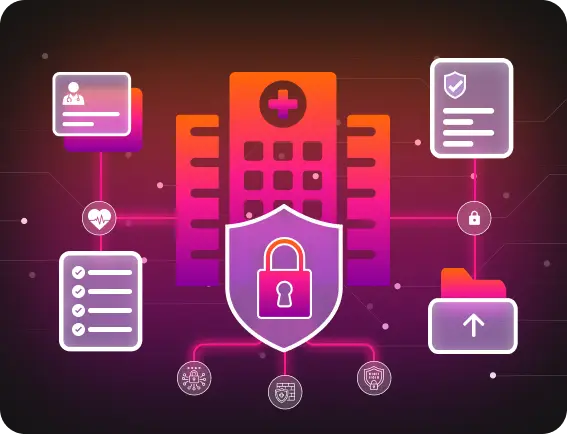
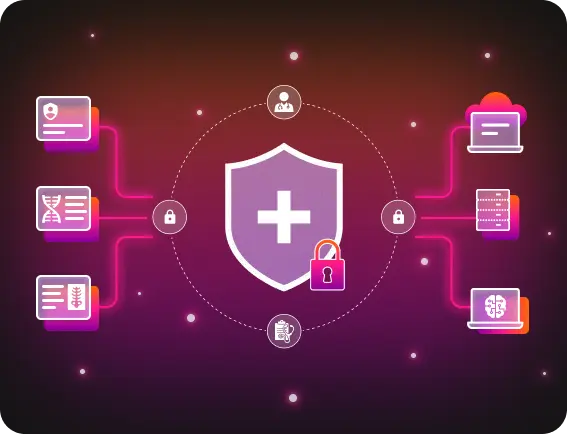
We apply strict data governance controls to all AI systems that interact with patient data:

  • PHI is never used to train AI models without explicit authorization or a valid waiver.
  • A Privacy Impact Assessment (PIA) is conducted before any AI system processes PHI.
  • De-identification is applied where full PHI is not required.
  • Data lineage is documented for all PHI flowing through AI pipelines.
  • Training data is validated for completeness, accuracy, and representativeness, and monitored for drift.
ai-governance-nist

Human Oversight & Patient Rights

We are committed to ensuring that AI augments, not replaces, human judgment in healthcare:

  • Critical AI systems require clinician review and sign-off before any action is taken.
  • Clinicians can reject any AI recommendation, with rationale documented.
ai-governance-iso42001

Transparency & Explainability

We publish model documentation for all clinical AI systems, covering intended use, performance metrics, known limitations, and bias test results.

ai-governance-hitrust

Security Controls

All AI systems are protected under CIVIE’s enterprise security standards, including:

  • Encryption of all PHI at rest (AES-256) and in transit (TLS 1.2+).
  • Role-based access control (RBAC) with least-privilege principles.
  • Comprehensive audit logging for all AI system access to PHI.
  • Regular security testing of guardrails and OWASP top10 for AI
  • Annual penetration testing.
  • AI systems hosted in SOC 2-compliant environments.
ai-governance-security

AI Incident Response

We have AI-specific incident response procedures integrated with HIPAA breach notification requirements. Our 24X7 Security Operations team monitors and investigates security events in realtime.

Back to top